Label Breakdown #2: Barebells
Second in the subscriber-only Beyond Normal Science series breaking down specific protein bar brands.

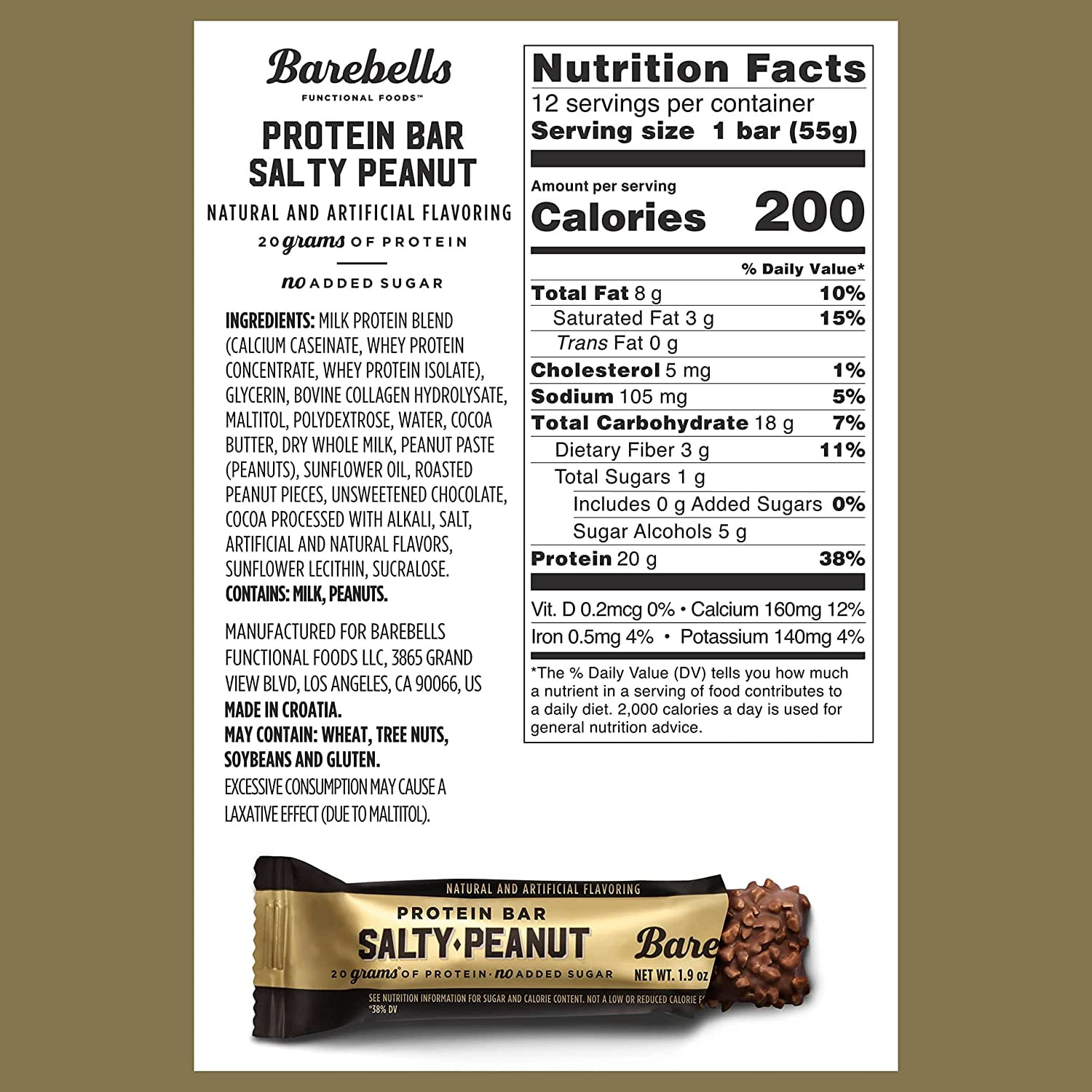
The Barebells brand has grown quickly - walk into any Target, Costco, or major grocery chain and there is a Barebells display somewhere between checkout and the pharmacy section.
The formula reads well on the front of the package (20 grams of protein, low sugar, roughly 200 calories, decent taste, wide flavor selection) and has become one of the default “healthy” bars for a large audience.
So let’s turn the wrapper around and analyze what’s actually in this product - the good, and the potentially less good.
For a primer on basic label reading 101, check out my label breakdown series.
The full breakdown, ingredient by ingredient, is below for subscribers.
Check 1: The Ingredient List
The current Chocolate Dough Barebells SKU ingredient list, in order:
Milk protein blend (calcium caseinate, whey protein isolate, whey protein concentrate), glycerin, bovine collagen hydrolysate, maltitol, polydextrose, cocoa butter, dry whole milk, water, soy protein isolate, sunflower oil, unsweetened chocolate, cocoa processed with alkali, tapioca starch, natural and artificial flavors, salt, sunflower lecithin, sucralose.
Applying the framework: seventeen ingredients, several of which are red flags on their own. The first ingredient (milk protein blend) is high-quality complete protein and correctly leads the list, which is a real point in the product’s favor. From there, the list moves quickly into industrial territory: glycerin as a humectant (moisture-attracting substance), collagen inflating the protein number (more on this shortly), maltitol as the primary sweetener, polydextrose as a synthetic fiber for bulk, and further down the list, sunflower oil as the primary fat.
This is an ultra-processed product. The ingredient count and complexity put it in roughly the same class as David bars, though the specific choices are different. Where David optimized around a novel synthetic fat to hit an aggressive macro target, Barebells uses a more conventional formula that leans harder on maltitol and sunflower oil to achieve its numbers. Neither approach produces something that resembles food in the whole-ingredient sense.
Check 2: The Sugar Situation
Barebells lists 1 to 2 grams of sugar per bar, depending on flavor, versus David’s zero. That is a small point in Barebells’ favor from a “how honest is the sweetener situation” standpoint. But how did they get to such a low number, with such a sweet product?
The primary sweetener is maltitol, listed as the fourth ingredient. This means maltitol is present in significant quantity, likely 8 to 12 grams per bar depending on the flavor (estimated.)
Referencing the sugar alcohol primer from Monday: maltitol is specifically the sugar alcohol with the highest glycemic index (35 to 52, depending on formulation,) the worst gastrointestinal tolerance profile, and the highest likelihood of producing gas, bloating, and osmotic diarrhea, particularly in doses above 10 grams. A single Barebells bar puts most consumers right at or above that threshold.
The secondary sweetener is sucralose, a high-intensity artificial sweetener, chemical that has quite contested effects on gut microbiome and glucose tolerance.
