Q&A with Greg Scheinman from Midlife Male
How to approach aging well in the middle decades of life.

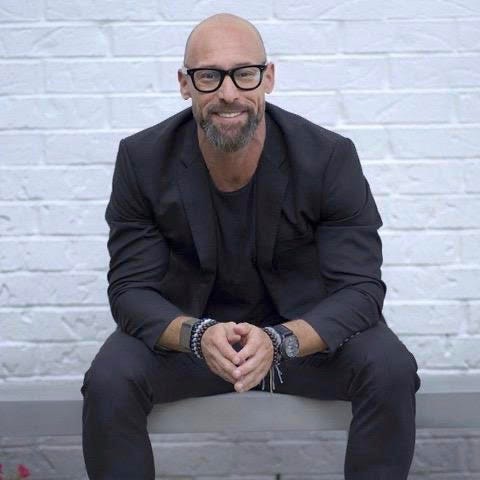
Greg Scheinman, Midlifemale.com
1. You have built The Midlife Male around a holistic framework that refuses to treat health as a single domain. When a 45-year-old guy comes to you genuinely overhauling his life, what is the order of operations you give him? What does he start with, what does he get to next, and what is the most common mistake of trying to attack all of it at once?
Start with clarity. Most guys want to skip straight to the doing, I use two rules: “Knowing what’s important, is what’s most important” and “If you don’t know where you’re going, you’ll never get there.” You have to have a plan. I call it a Midlife Action Plan (MAP); it’s a business plan for your life. We write it. Guys understand that. It’s measurable & quantifiable. From there, we start with health first, it’s the most reliable and controllable on-ramp. When a man starts improving his health, everything in his life starts getting better; his sleep improves, his thinking sharpens, his discipline spills over, his confidence increases. It’s the lever that moves everything else.
This stacks. You show up better as a husband, father and provider.
The most common mistake? Attacking everything at once. Men treat it like a project and a rush job, here’s my sleep protocol, here’s my diet overhaul, here’s my marriage homework, here’s my financial audit. Two weeks in, it collapses under its own weight. Progress is a process.
2. Most overhyped vs. most underhyped longevity intervention?
Overhyped: biological age testing. I’m 53. I want to be the best 53 I can be. I don’t need to be told that I’m 35 by some bracelet or app. You get a bad number, your day is ruined. You get a good number, maybe you feel you can stop doing some things. Creates all kinds of issues either way. I just need to know that what I’m doing each day is helping me to be the best version of myself I can be for the actual age I am. You have one age. One number. That’s it.
Underhyped: The boring, basics. I know that’s not a sexy answer. But I have watched men spend thousands on peptides, complex workouts, machines, red light panels, and VO2max testing while staying up until 1am on their phones trying to hack everything, buy everything and do the latest, greatest, newest, whatever. To really play the long game stick to the basics over biohacking.
3. TRT: what’s real, and what’s commercial noise?
The pattern I see most: it’s rarely the guy who feels terrible. It’s the guy who feels ok, but not like himself. Less drive, less edge, softer in ways he can’t quite name. He’s seen the ads, talked to a friend who swears by it, and he wants to feel 38 again. That’s legitimate. That’s a real thing.
Where it gets complicated is the telehealth-to-prescription pipeline. Fill out a form, answer a few questions, get a kit in the mail. No one’s asking him about his sleep, his stress, his alcohol intake, his exercise history, all of which can crater testosterone without any underlying pathology. The honest clinical use is for men with genuinely low T who have addressed lifestyle variables and still need support. The commercialized version is selling optimization to men who are really just under-slept, over-stressed, and under-trained.
I’m not anti-TRT. I’m on it. Have been since 49. I’m anti-TRT as a shortcut. There’s a difference.
4. The hardest non-physical thing midlife men avoid?
Grief. Not grief in the funeral sense, grief over the version of themselves they thought they’d be by now. The career they didn’t build. The marriage that’s more functional than intimate. The friendships that quietly faded. Men don’t have language for that, and they don’t have permission to feel it, so they don’t. They just push harder on the things they can measure.
What it costs them is the thing they say they want most: connection. They can control optimizing their sleep and their strength and their labs, and they’re still fundamentally alone in the ways that matter. Their wife doesn’t really know them. Their friends don’t either. Because intimacy requires honesty about what’s actually going on, and they’ve been ignoring having the conversations that really matter with the people in their lives who really matter.
The men who do the work on this, who actually sit with what they’ve lost, what they regret, what they want the second half to look like, those are the ones who make real changes. The rest are just adding supplements, clothes, watches, cars and any of the other midlife stereotypes.
5. You have five hours a week to spend on fitness and overall wellness in a busy week - where are you spending them?
Three hours of movement. Two sessions of something that gets your heart rate up, zone 2 if you have the patience, a hard run or a heavy lift if you don’t. One session that’s longer and slower. Not complicated.
One hour for your marriage. Not a date night that’s really just two tired people at a restaurant looking at their phones. A real conversation. About where you are, what you need, what she needs. That hour will return more than any biohack you’ve ever bought.
One hour for yourself. Not productivity. Not a podcast about optimization. Something that has no output; a walk, reading something you actually enjoy, sitting outside. The internal work happens in the white space, not the scheduled hours.
That’s it. Five hours. The trade-off I’d name honestly: you’re probably not going to look like someone who trains twelve hours a week. That’s fine. You’re trying to be healthy, present, and functional for the next forty years, not win a physique competition. Optimize for that man, not the Instagram version.
For more, check out midlifemale.com