The Four Things That Actually Matter on a Food Label
Announcing a new Beyond Normal Science series, plus the framework every reader can use to cut through the noise on any packaged food in the meantime.

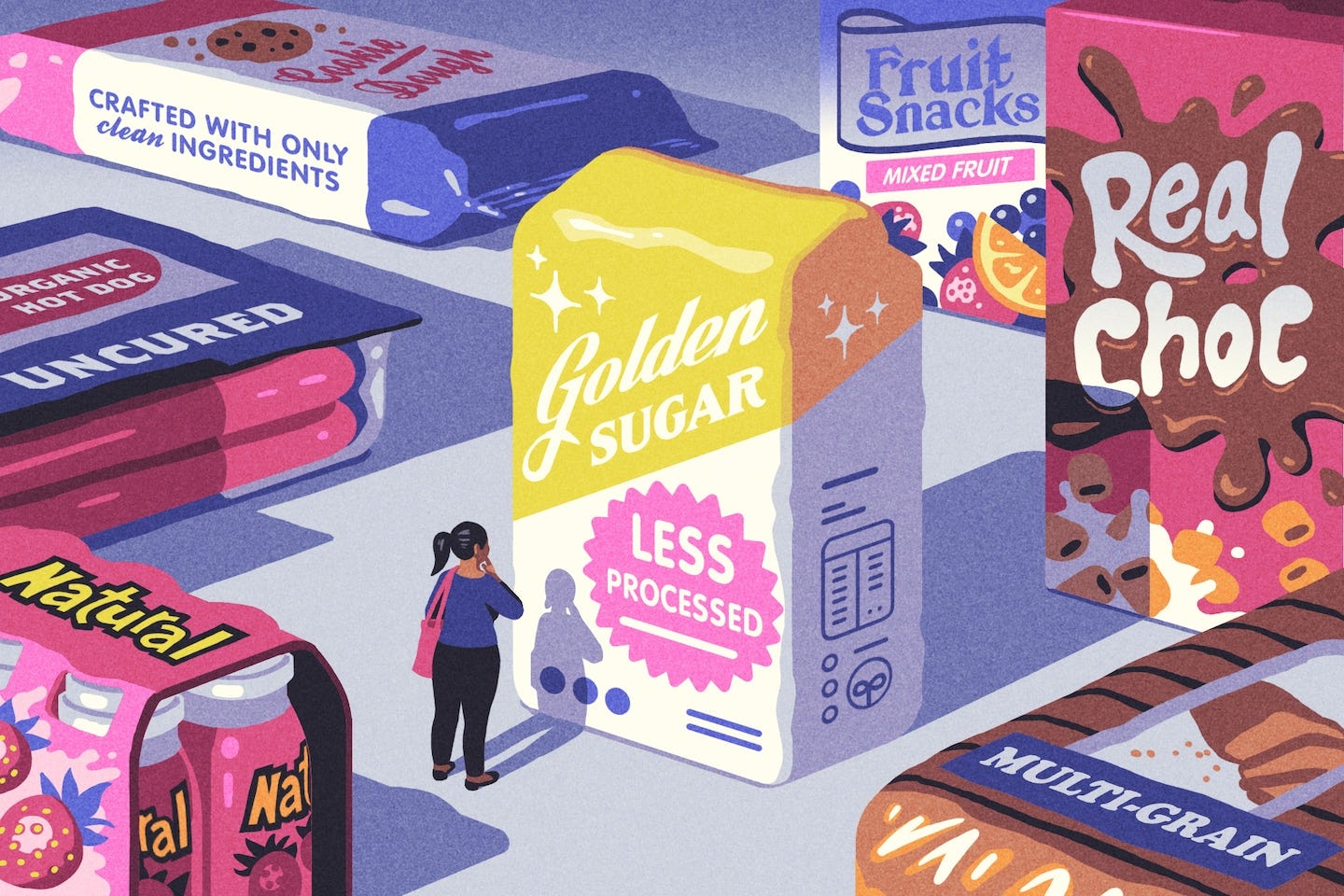
The modern packaged food label is designed to make you feel good about a decision the manufacturer has already made for you.
Starting in August, I am launching a new series for paid subscribers on this Substack where we walk through the actual labels of specific product categories that patients ask me about constantly. First up in August: protein bars, the category where the health-halo marketing has gotten furthest ahead of what is in the wrapper. Then in September: protein shakes and ready-to-drink protein products, where the ingredient list is often more revealing than the protein content.
Each of those posts will be a real, product-specific walkthrough. Named brands. Labels photographed and annotated. Ranked recommendations. The goal is not to shame any single company but to give you the analytical tools to walk into any grocery store and read a label the way a physician reads a chart.
Before we get to specific products, though, everyone reading this deserves the underlying framework. Whether you subscribe to the deep dives or not, the following four checks will let you read almost any packaged food label in about 30 seconds and know whether it belongs in your cart. Learn these four, and you will already be doing better than most.
1. The Ingredient List Tells You Almost Everything
The single most useful part of any food label is the ingredient list, and most people never actually read it. Two rules make it easy:
First, ingredients are legally required to be listed in descending order by weight. The first three to five ingredients are essentially the product. If those first five are recognizable whole foods, the product is probably food. If those first five include cane sugar, high-fructose corn syrup, palm oil, soybean oil, and maltodextrin, no marketing claim on the front of the box changes what you are actually buying.
Second, length matters. A short ingredient list of things you could buy individually at a grocery store is almost always a better product than a long list containing chemicals, gums, colors, and preservatives you have never heard of. Long ingredient lists almost always mean industrial processing designed to produce shelf stability, texture, and mouthfeel that whole ingredients cannot deliver on their own. That processing carries its own metabolic and health costs that are increasingly well documented in the ultra-processed food literature.
2. Added Sugars, Not Just Total Sugars
Since 2020, the FDA has required food manufacturers to list “added sugars” as a separate line on the Nutrition Facts panel, distinct from total sugars. This distinction is one of the most useful changes in food labeling in the last decade, and most consumers still do not know to look for it.
Total sugars include the naturally occurring sugars in the ingredients (like lactose in dairy or fructose in fruit) plus anything added during processing. Added sugars are the ones the manufacturer put in. A Greek yogurt with 10 g of total sugars and 0 g of added sugars is a fundamentally different product from a Greek yogurt with 20 g of total sugars and 15 g of added sugars, even though the second one might look reasonable on the front.
Practical rule of thumb: aim for products with less than 5 g of added sugar per serving, and be extra suspicious of any product that lists added sugars in the top five ingredients. Also note that sugar has dozens of names on ingredient lists (cane juice, brown rice syrup, agave nectar, dextrose, maltose, evaporated cane crystals, and so on), and manufacturers often use multiple different sugar sources to push each individual sugar further down the ingredient list. When you see three different sweeteners in one product, that is the trick being played.
3. Protein Source Matters More Than Protein Grams
The modern packaged food industry has figured out that “high protein” sells, and the labels have adapted. What has not adapted is consumer literacy about what protein source is actually in the product.
Not all “protein” on a label is nutritionally equivalent. Whey protein, whey isolate, casein, egg protein, and high-quality plant blends (typically pea plus rice) are complete proteins with the full essential amino acid profile needed to support muscle protein synthesis. Collagen, on the other hand, is legally allowed to be counted as protein on the Nutrition Facts panel but is missing tryptophan and is a poor stimulus for muscle growth. Many “protein bars” and beauty-marketed products list 15 or 20 grams of “protein” that is largely collagen.
The 30-second version: check the ingredient list for the specific protein source. If it says whey, whey isolate, casein, egg, or a named plant blend, the protein is functional. If it says collagen peptides, hydrolyzed gelatin, or “protein blend” without specifying, be skeptical. If the ingredient list features soy protein isolate as the primary source, that is a complete protein but often signals a lower-quality product overall.
4. The Industrial Ingredient Tell: Seed Oils, Emulsifiers, and Gums
The final check is a scan for the industrial food additives that indicate a heavily processed product regardless of what the marketing implies. Three categories to watch for.
Industrial seed oils (soybean, corn, canola, sunflower, safflower, cottonseed) are ubiquitous in packaged foods and are the primary source of linoleic acid in the modern American diet. Their extraction process is aggressive (hexane, high heat, deodorization), and repeated use produces oxidation products that accumulate in restaurant fryers and processed products alike. A product using olive oil, avocado oil, coconut oil, or butter as its fat source is generally in a different class than one using soybean or canola oil.
Emulsifiers and gums (carrageenan, xanthan gum, guar gum, polysorbate 80, cellulose gum) are added to give products a texture that whole ingredients cannot achieve. The emerging literature on their effects on the gut microbiome and intestinal barrier function is one of the more concerning areas of food science research right now. Occasional exposure is probably fine, but daily exposure across multiple products is the pattern worth avoiding.
Artificial sweeteners (sucralose, aspartame, acesulfame potassium) show up in nearly every “sugar-free” or “diet” version of a product. Their effects on appetite regulation, glucose tolerance, and the gut microbiome are still contested, but the case for avoiding chronic daily exposure has gotten stronger over the last five years. Natural non-nutritive sweeteners (stevia, monk fruit, allulose) are generally better options if you need sweetness without sugar.
What’s Coming Next
Over the next two months, I will use this exact framework to walk through real product categories with named brands and specific ingredient breakdowns. In August, we will do protein bars: the good, the misleading, and the outright junk. In September, we will do protein shakes and ready-to-drink protein drinks, where the collagen problem and the emulsifier problem both show up in force.
If you want the shortcut version of this content, the four-point check above is the tool and should work on any label. Master it once and you will spend the rest of your life making better food decisions.
The specific brand breakdowns coming in August and September are for the readers who want to skip the analysis and just know which products to pick up. Both approaches have their place. Both are coming.
This post is for informational purposes and does not constitute medical advice. Individual dietary needs should be discussed with a knowledgeable physician or registered dietitian.
Very good!
The collagen-counting-as-protein point is the one most people would benefit from knowing. Twenty grams on the front of the wrapper doesn't mean twenty grams of anything useful for muscle. That single check would change what half the protein bar aisle looks like.
Thanks for this … even better when you use food where there is no label.